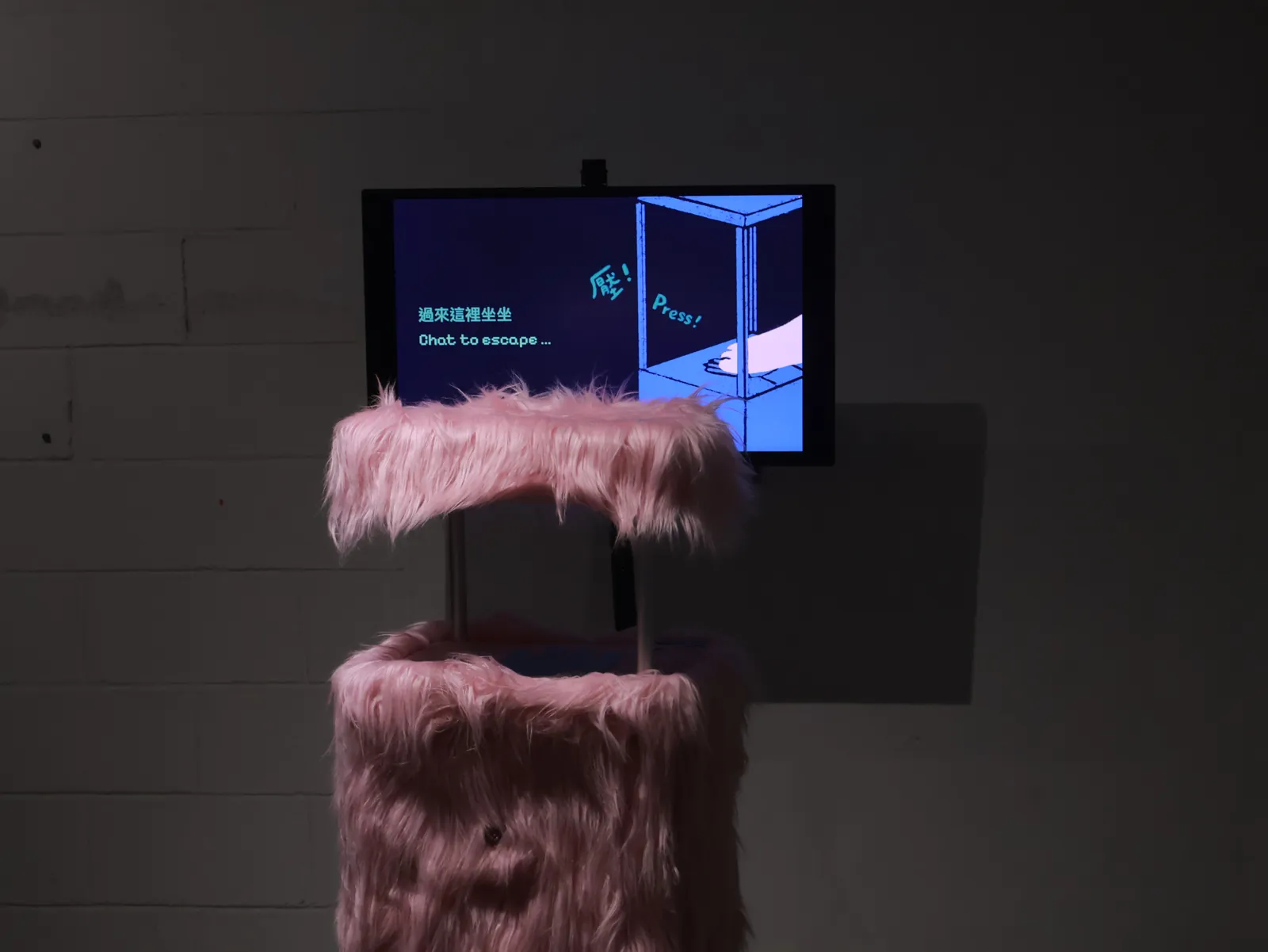
Chat to Escape
Your hand is locked. To get out, you have to make yourself heard.
- Artists
- Chia Ni Chen, Ting Yu Lin, Min Hsi Chen
- Year
- 2026
- Medium
- Interactive installation · wood, faux fur, electronics, telephone, screens
Prologue
In an empty row of seats, we leave one chair between ourselves and a stranger. What happens when that chair is gone?
The Work
Lose the freedom to keep your distance; speak first to get it back.
The Experience
- PressTrapped
- AskReach out
- AnswerA stranger
- ReleaseFree
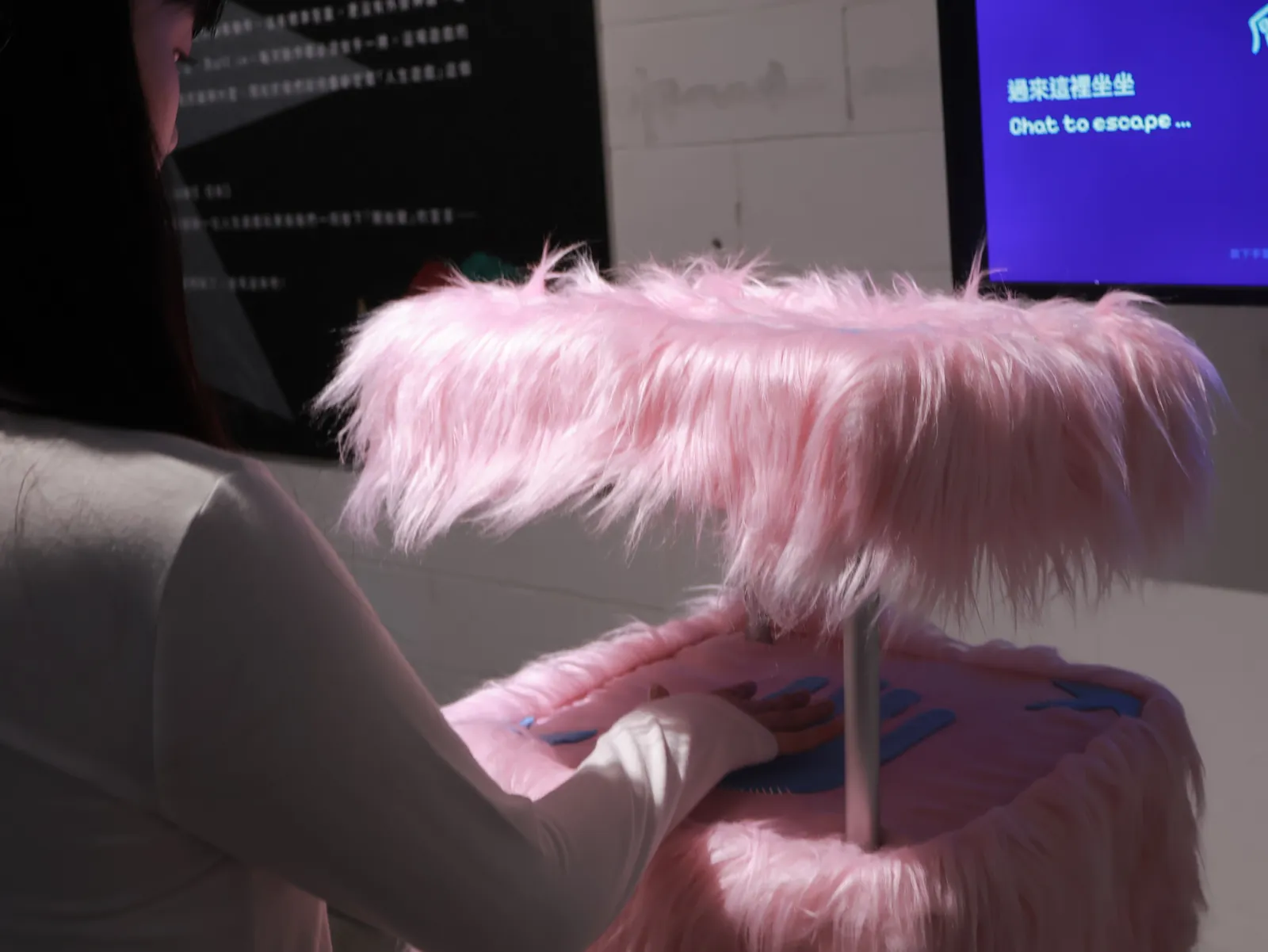
I · PressYou press the button.Your hand is locked in place, and you cannot step away.
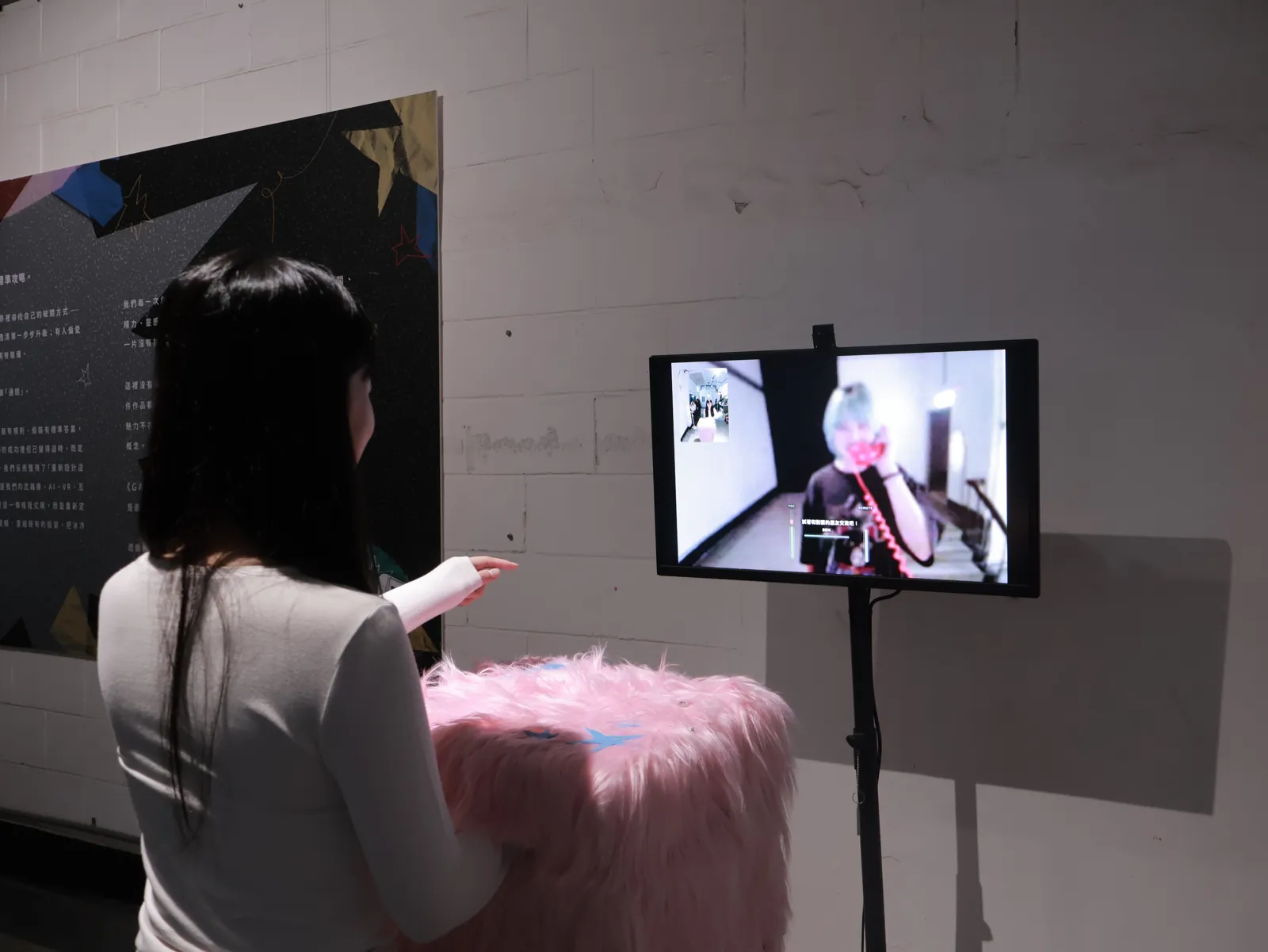
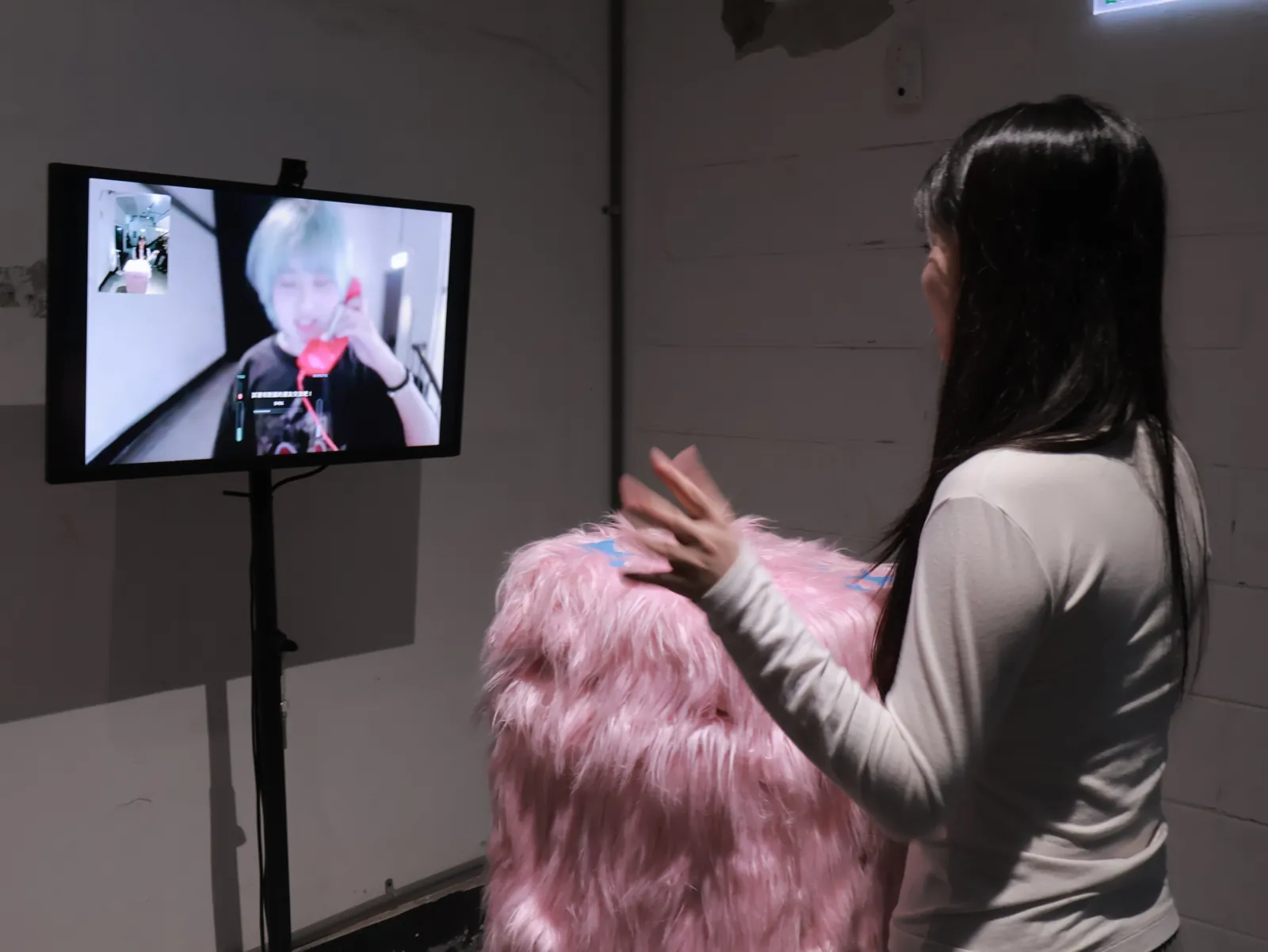
II · AskThe first way out is a stranger.Someone in another part of the building can pick up a red phone. Only then do they appear on your screen, and you have to ask, knowing you may be refused.
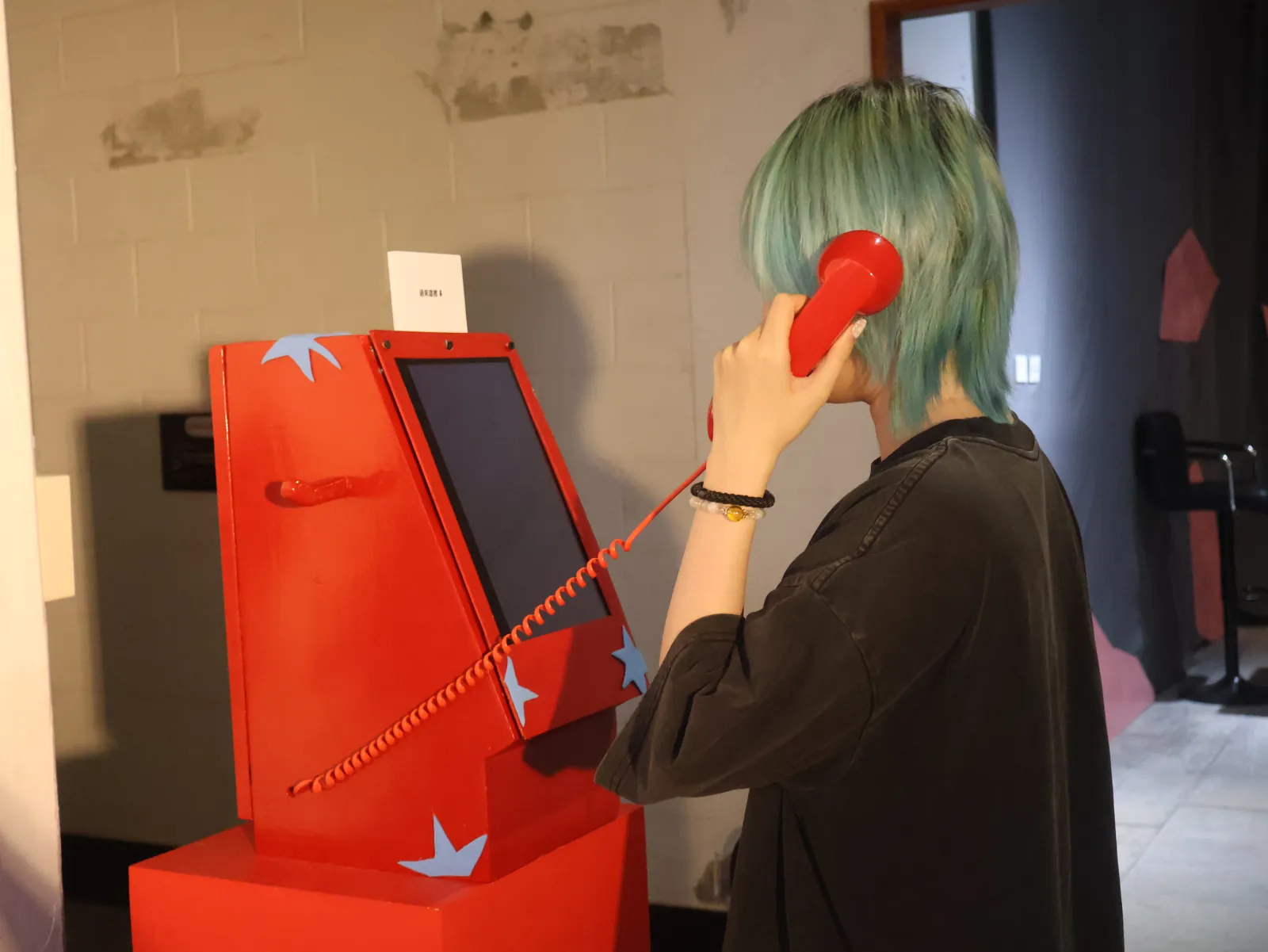
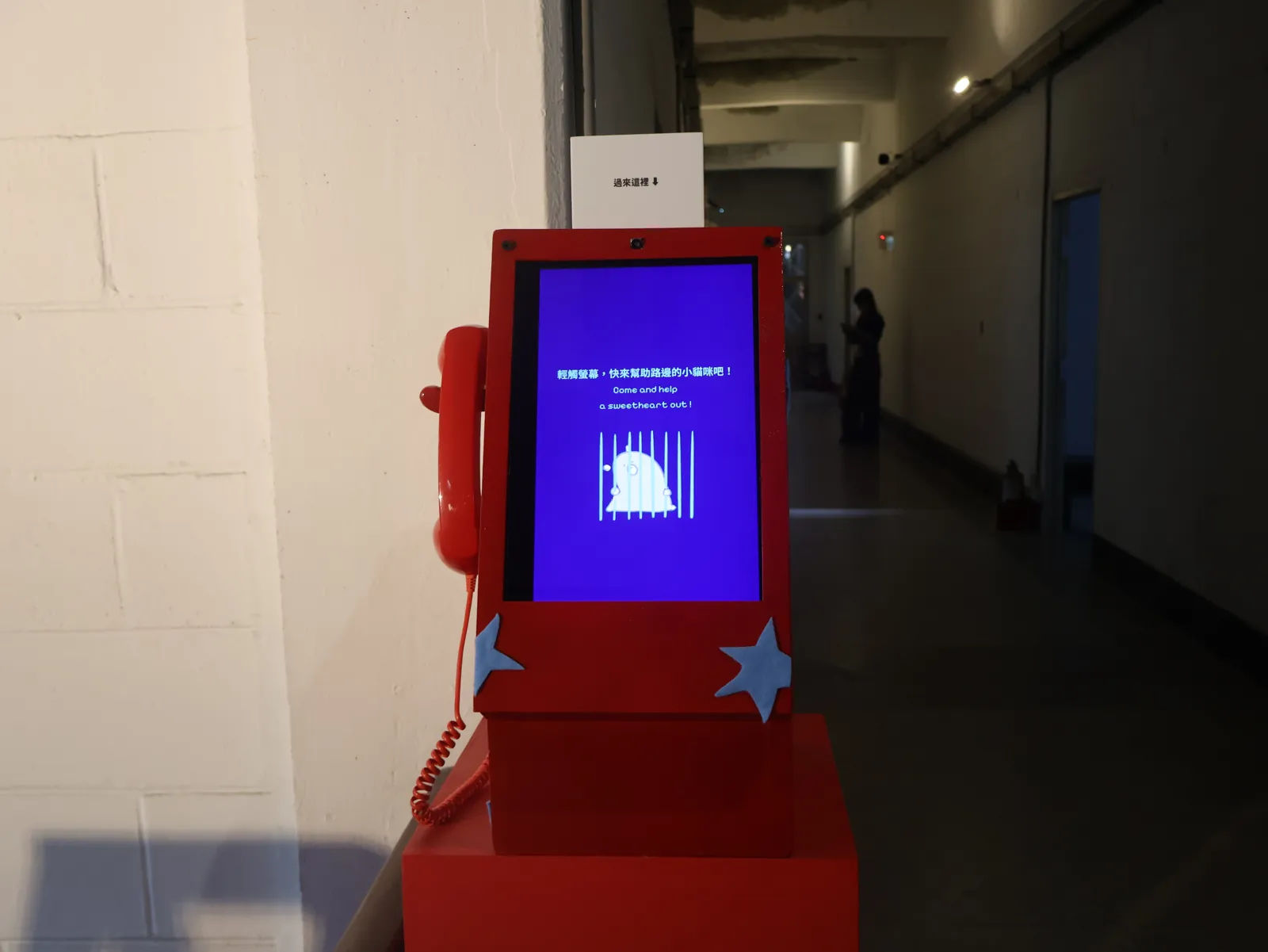
III · AnswerDown the corridor, a red phone.Whoever is passing can walk on, or pick up.
IV · ReleaseThe lock lets go.Only your voice can fill the meter: by talking with the stranger or, if no one answers within 30 seconds, by shouting until it reaches 100%.
Artist Statement
A polite distance, taken away.
There is a social threshold between people. Most of us never cross it: we keep a seat between ourselves and a stranger, we do not start talking for no reason, and we avoid doing anything embarrassing in public. This piece pushes you over that threshold, so that you can feel the connection on the other side. It began from Hall’s work on personal space and Goffman’s on being watched, both of which describe the unease of being close to, and seen by, other people. The final piece gives up the chair but keeps what the chair protected: the choice not to engage. That choice is what the lock takes away.
Form & Immersion
Anxiety, made physical.
A phone call can be interrupted, declined or left in silence. By restraining the body, the installation removes that flexibility: the discomfort of approaching a stranger becomes something you feel in your hand, and your voice becomes the only release. The lock takes away the usual reason to stay silent, but does not promise an answer. If no one picks up, you have to shout, which crosses the same threshold: it is something you would not normally do in front of strangers.
The second person is deliberately out of the room. The visitor at the lock has chosen to take part. Whoever passes the red phone has not, and can simply walk on, which keeps the outcome uncertain.
In the Space
Two ends, one conversation.
Shown at the NTHU Technology and Art graduation exhibition at C-LAB (Taiwan Contemporary Culture Lab), Taipei, with 1,000–1,200 visits. Advised by Tsai Tsun-Hung.
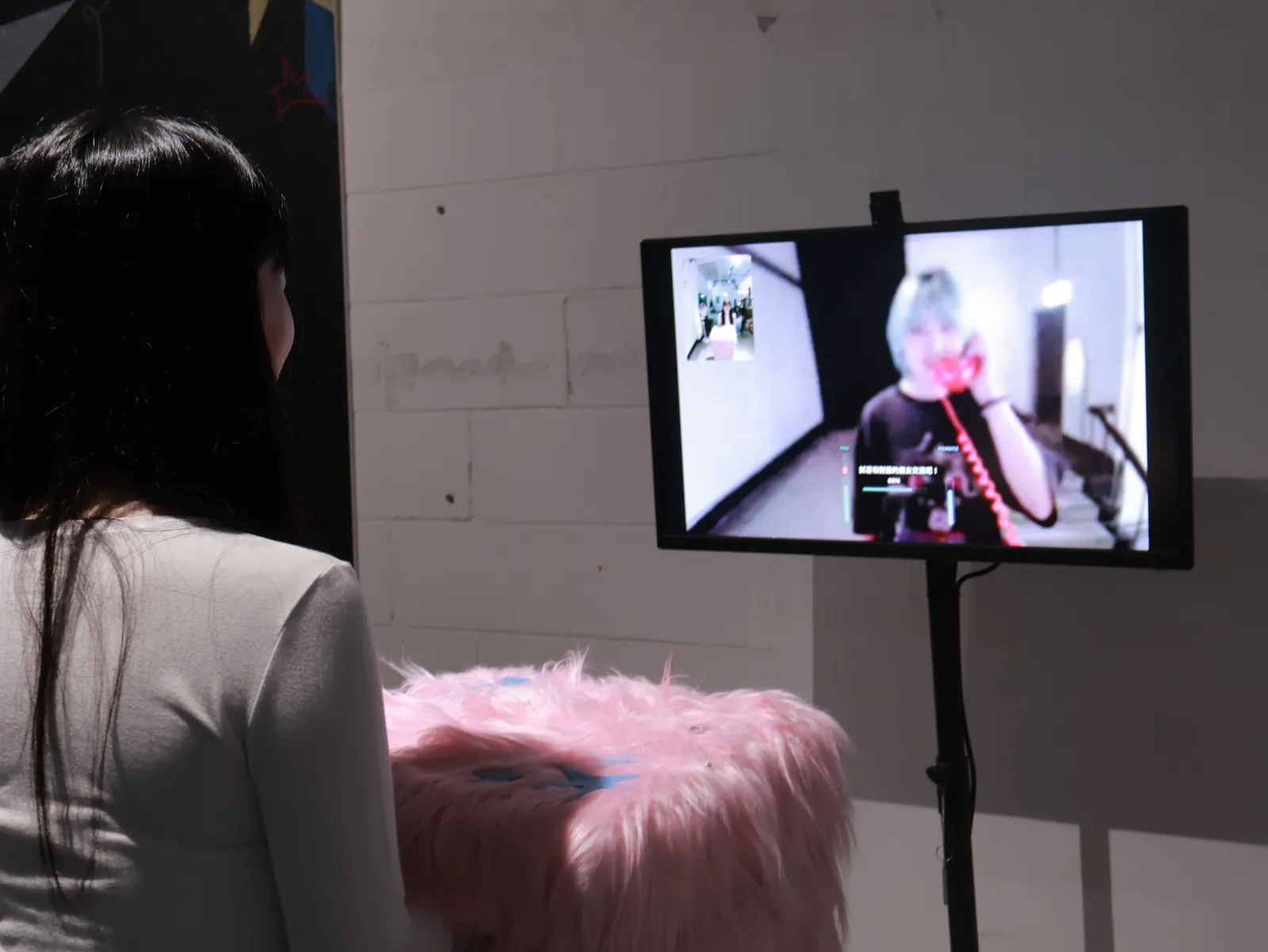 Live view of the strangerHand locked inside
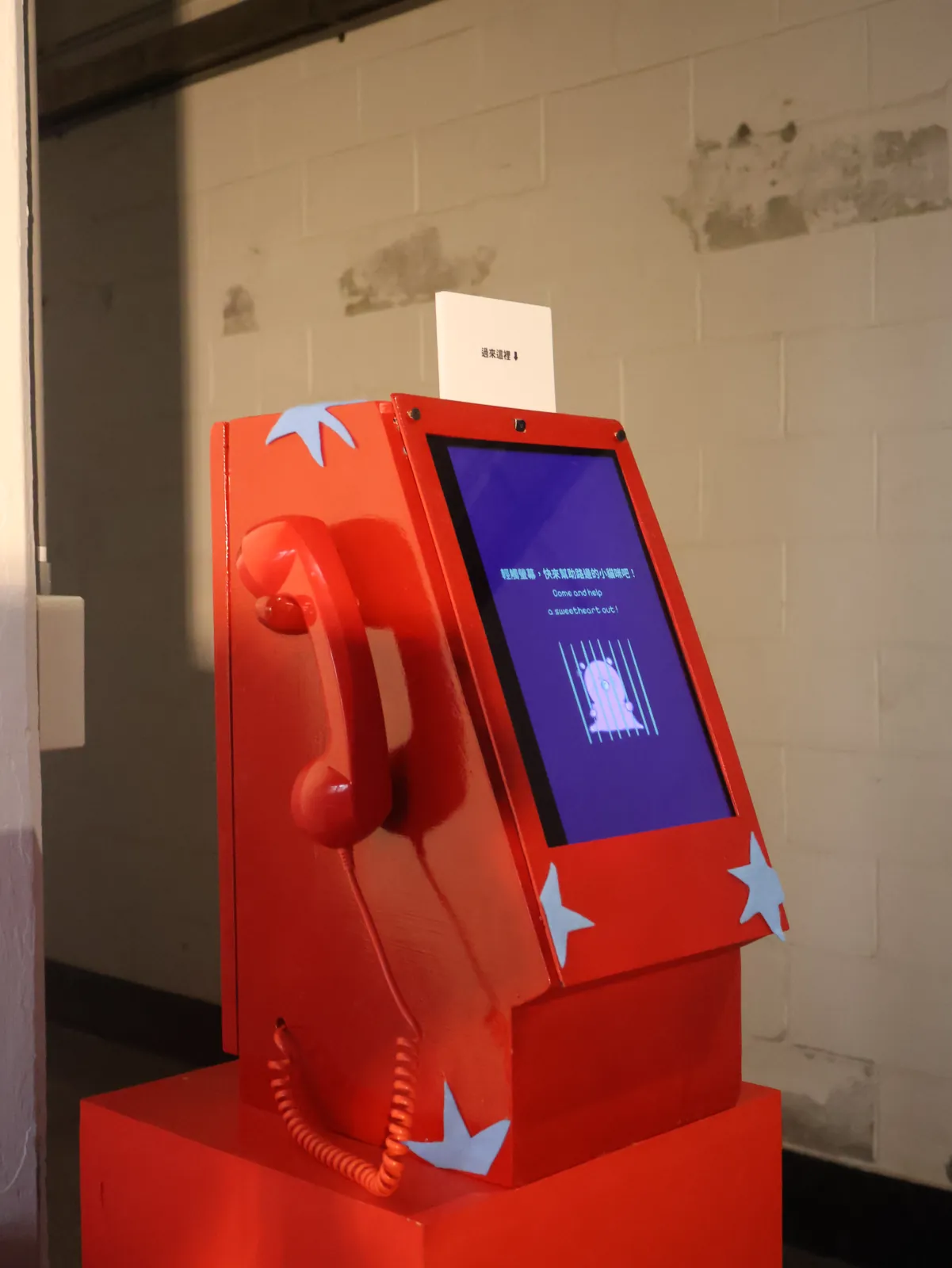 Pick up to answerShows the locked visitor
Process
Four ideas came before this one.
The first answer was about where people sit. The piece only found its form once the question narrowed to the awkwardness of social anxiety.
Chairs
A psychological test built from chairs: where you sit reveals your state of mind.
Seats
A seat-choosing installation in a computer classroom, staging what people expect when they pick a seat.
Traps
A kiss cam, a button that fires dry ice: situations around the exhibition that make you awkward on purpose. The question narrows to the awkwardness of social anxiety.
The seat
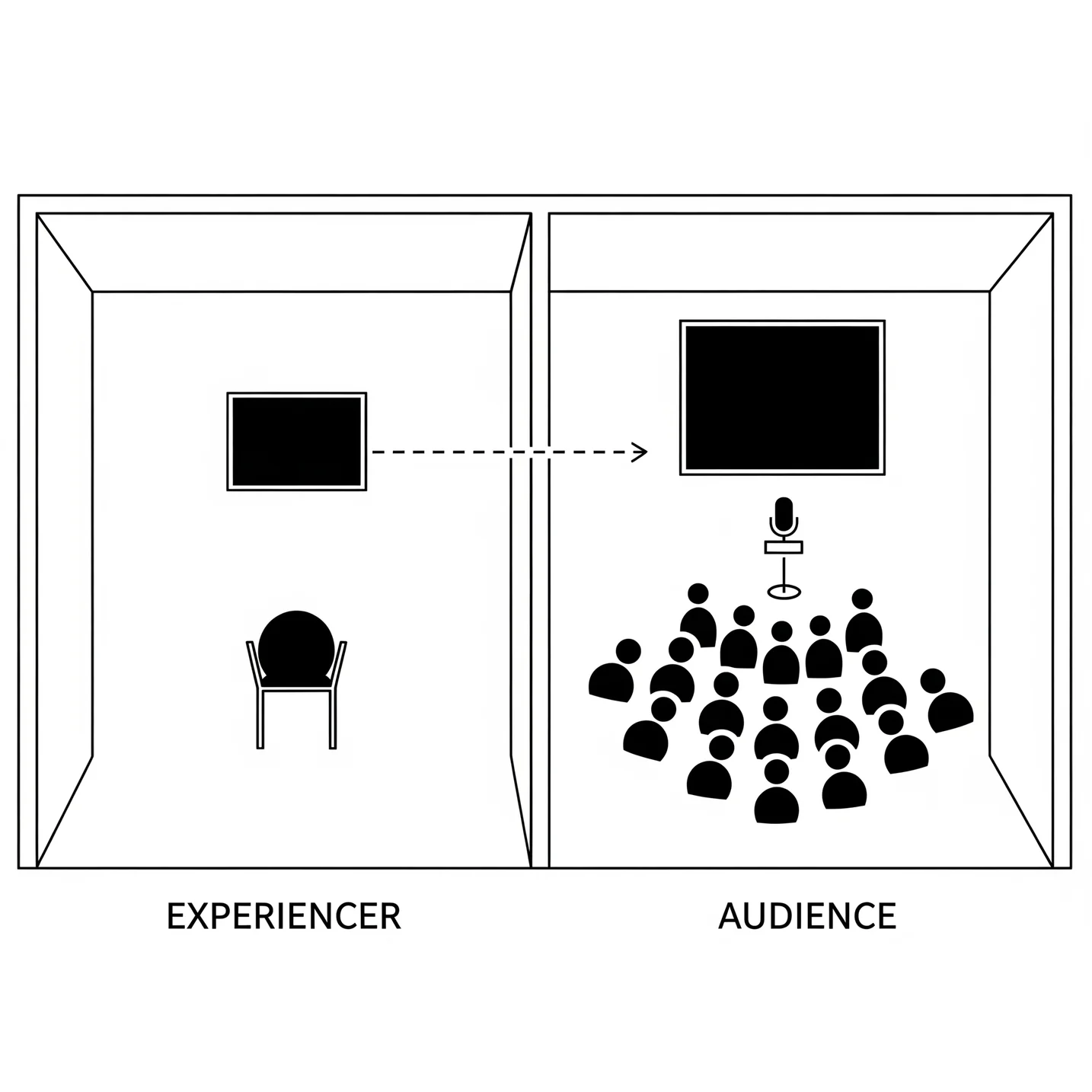
A seat that locks, linked to a remote audience. The visitor sits, is held, and must win a stranger’s help.
The hand
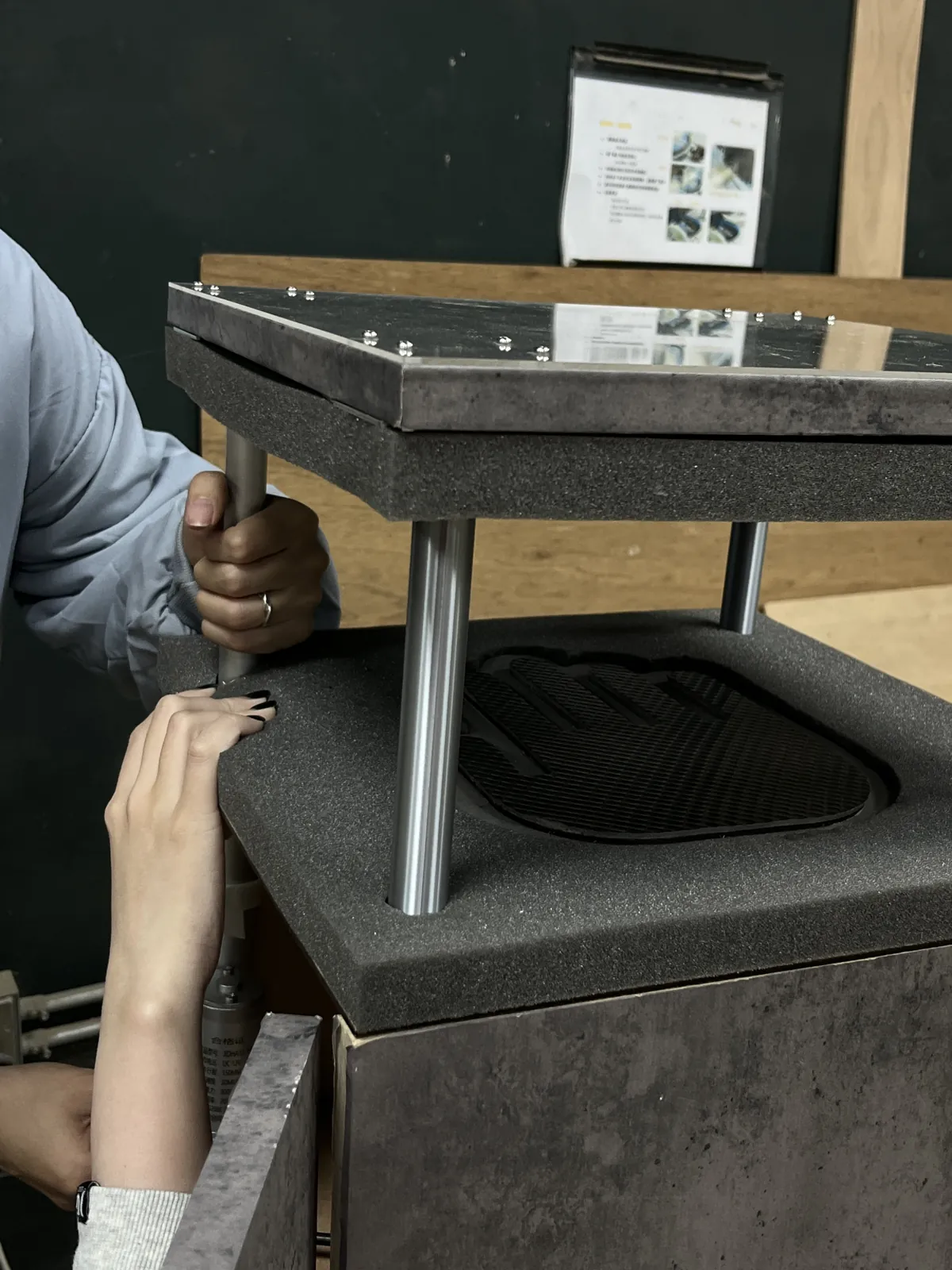
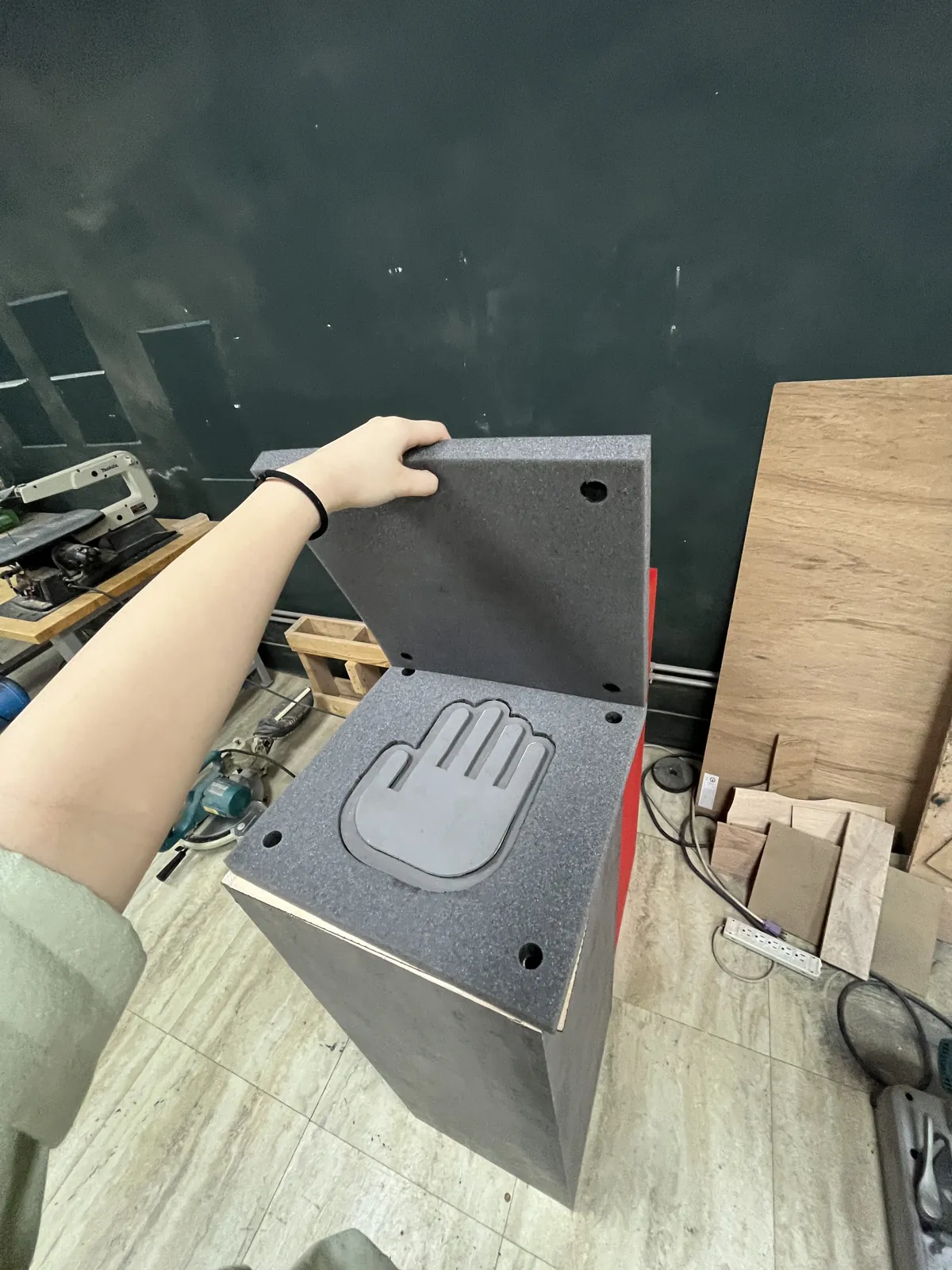
The final piece keeps the lock and the stranger, and gives up the chair. The first lock was a metal plate on steel posts.
The build
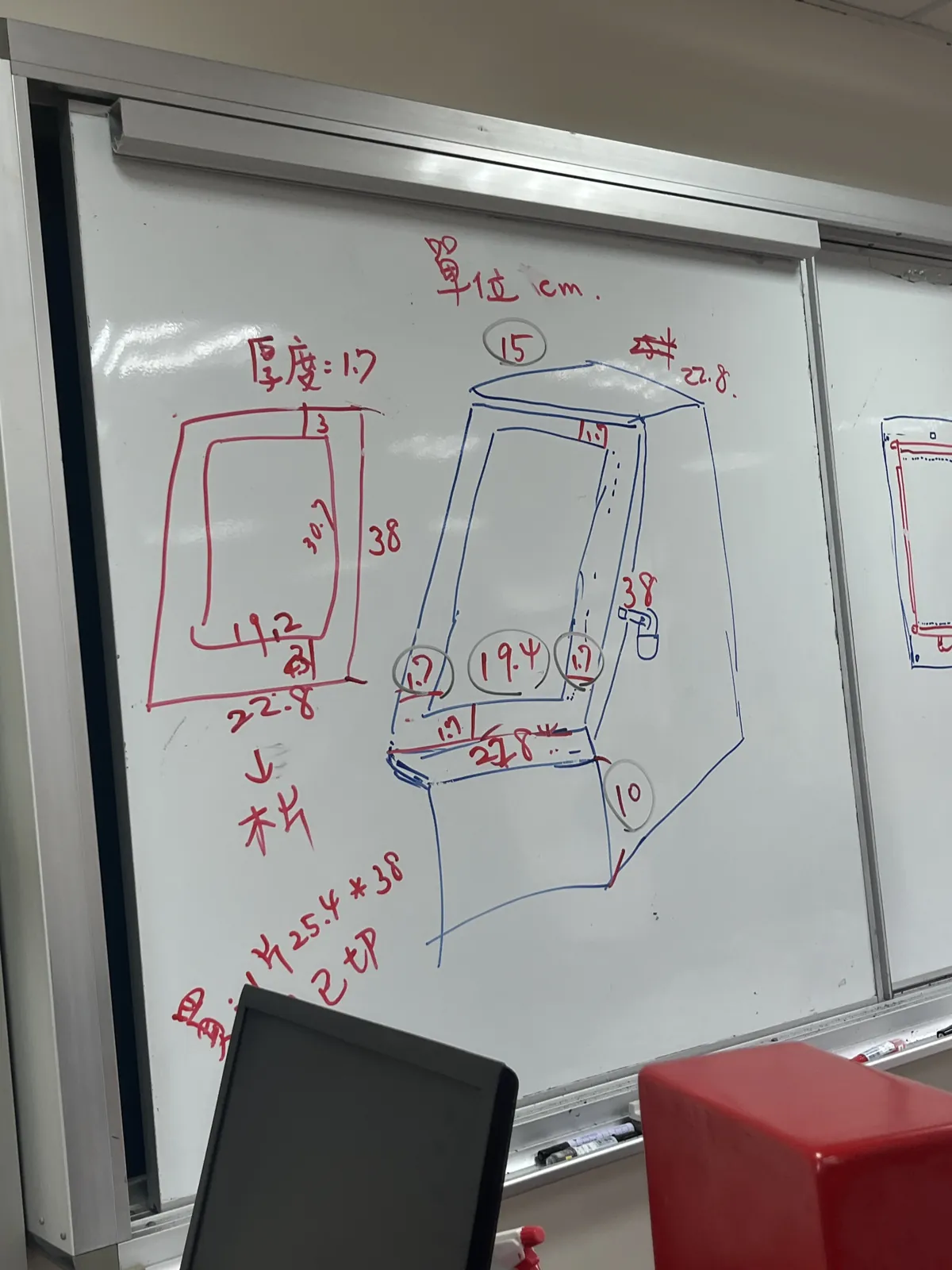
From a whiteboard drawing to a red telephone booth.
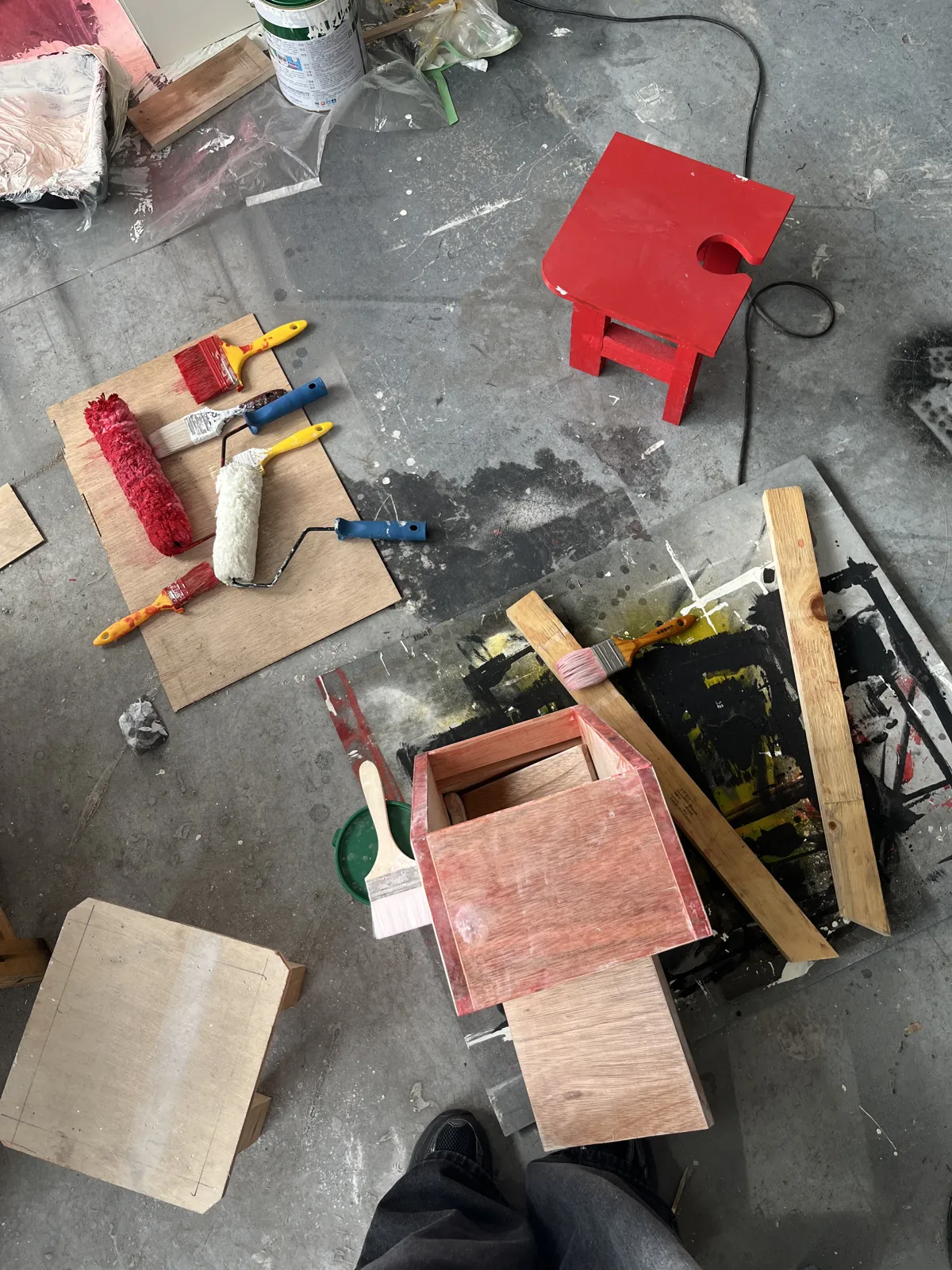
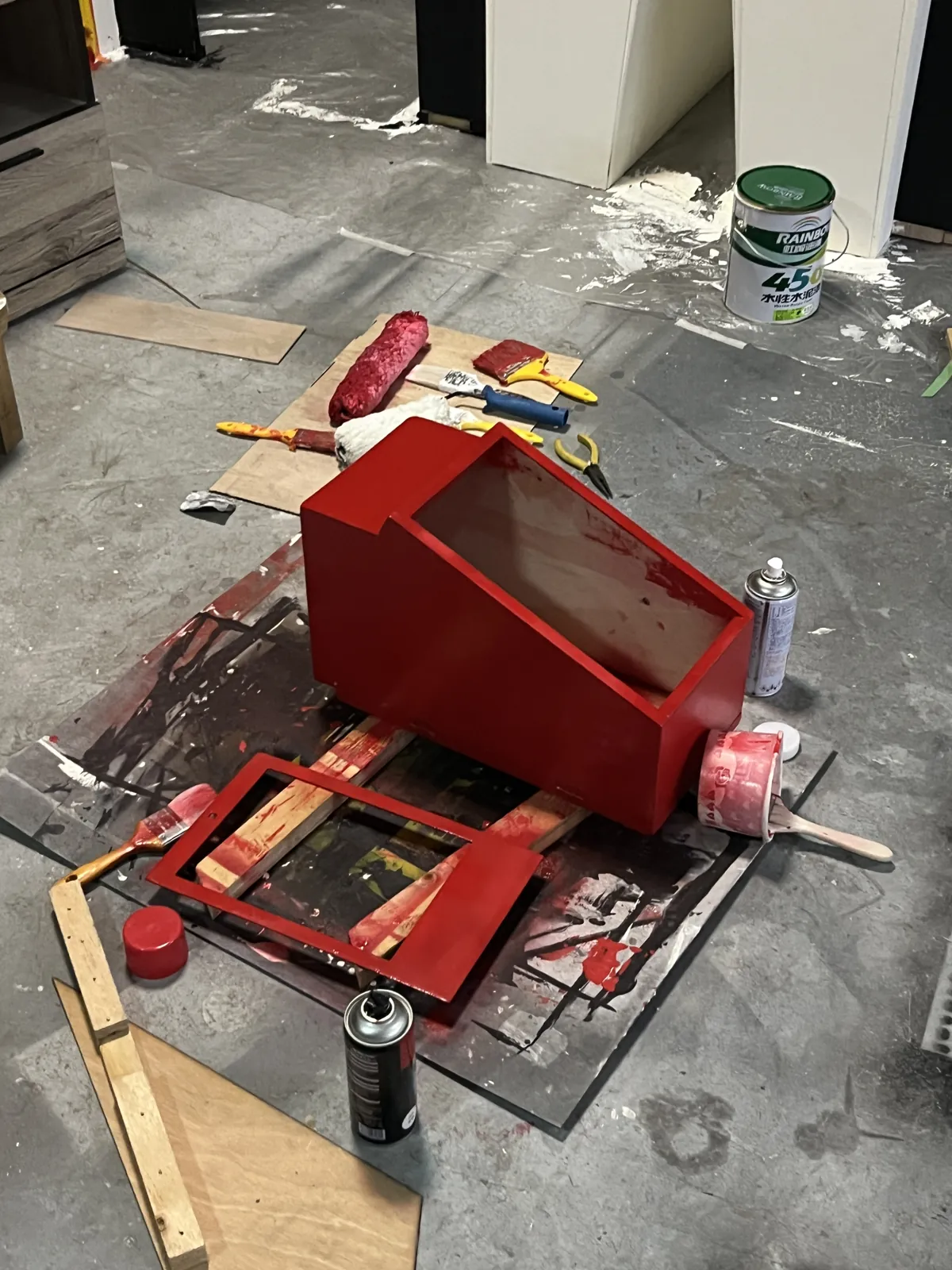
Choose a stage to open it.
About the Artist
Chia Ni Chen, Arts and Technology, National Tsing Hua University.
See another pieceCleaning Request: Room 624