




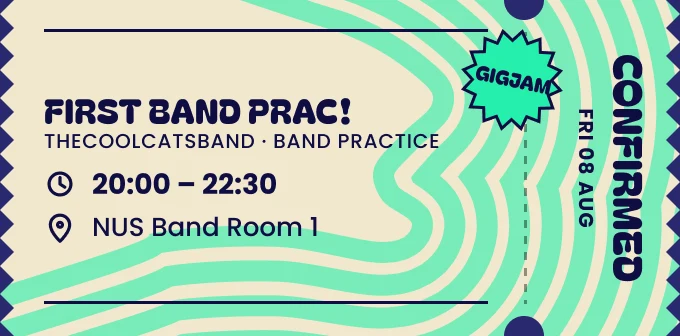

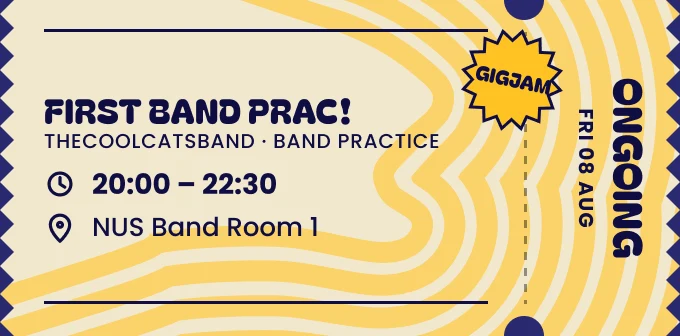

Bridging Bands and Musicians
Bands and musicians would rather trust a friend of a friend than a stranger online. Trust has to come from proof.
- Problem
- Bands and musicians turn to mutual friends, because they cannot tell whether a stranger can really play, will turn up, or is safe to meet.
- The turn
- Trust is built on proof and experience. A duet audition before meeting, a meetup the app helps arrange, and a GigJam history both sides confirm.
- Result
- A clickable prototype of the whole journey, revised after a usability test I ran with 3 participants: four findings, all addressed in the final version.
Situation
The wireframes, the personas and the final presentation.
The high-fidelity prototype and all the visuals. I reviewed every screen against UX laws, and ran the week-10 usability test.
A two-person course project at the National University of Singapore.
Musicians find bands through people they already know. Musicians looking for a band, and bands looking for a player, mostly turn to mutuals and connections, because it feels safer than a stranger online. People can’t tell whether a stranger can really play, will turn up, or is safe to meet.
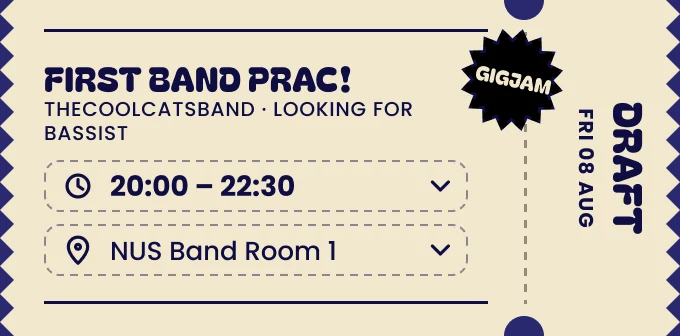
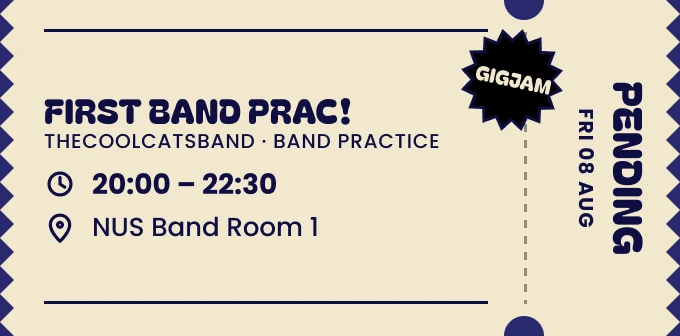
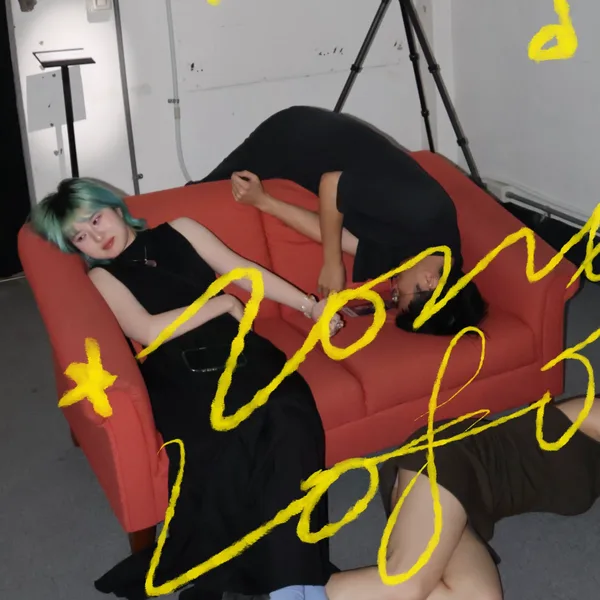 Persona · Demand · The CoolCatsBandA 7-member indie band needs a bassist for six months, after theirs moved abroad on exchange.
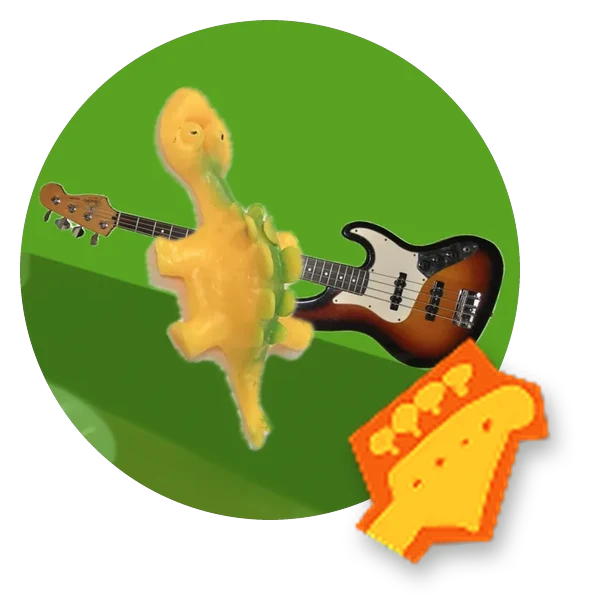 Persona · Supply · Maya, 24A casual bassist since high school wants to join a real band, but doesn't know where to start.
The turn
Trust is built on proof and experience.
The goal was to make matching between bands and musicians feel secure, reliable and trustworthy. Bands want to fill a role with someone they can trust; musicians want to widen their circle and build a record of playing. Three things answer both: virtual duet auditions, a confirmed history of GigJams with other users, and meetups the app helps arrange. Each confirmed GigJam builds both profiles, so the next match is easier to trust, for the band and the musician.
The work
Every step of the journey, clickable.
The prototype below runs on the screens and links I built in Figma. Choose a step, then tap through it as the band or as Maya.
Open the full prototype in Figma


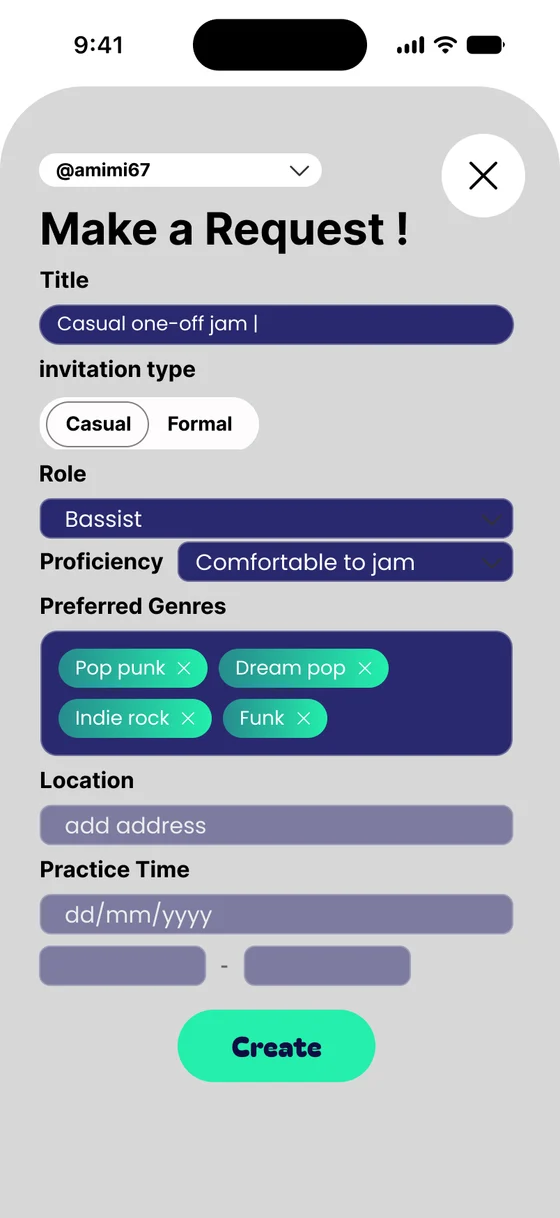
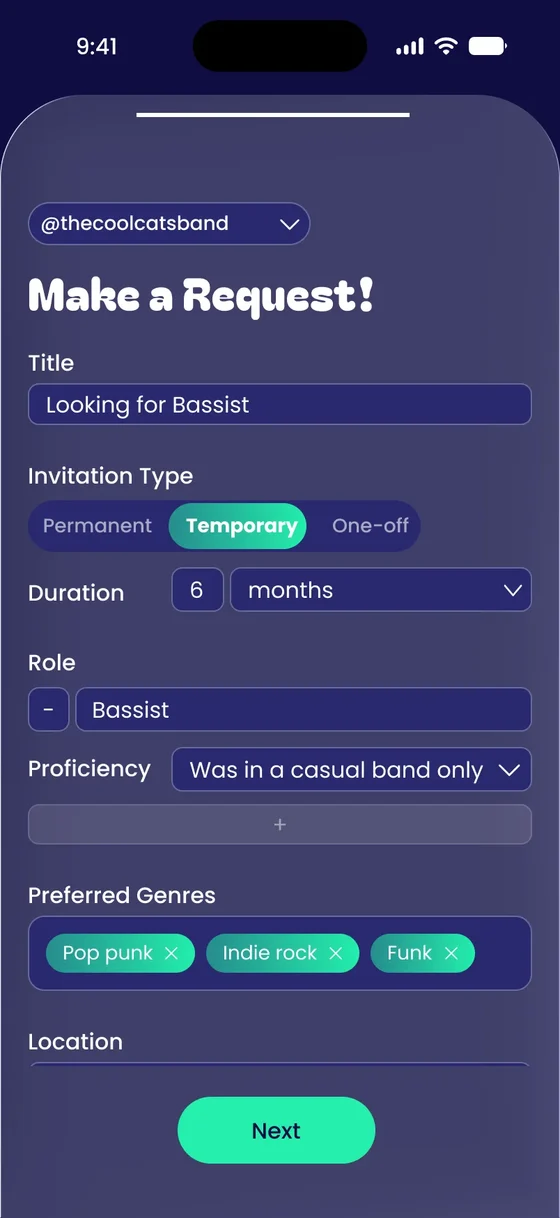
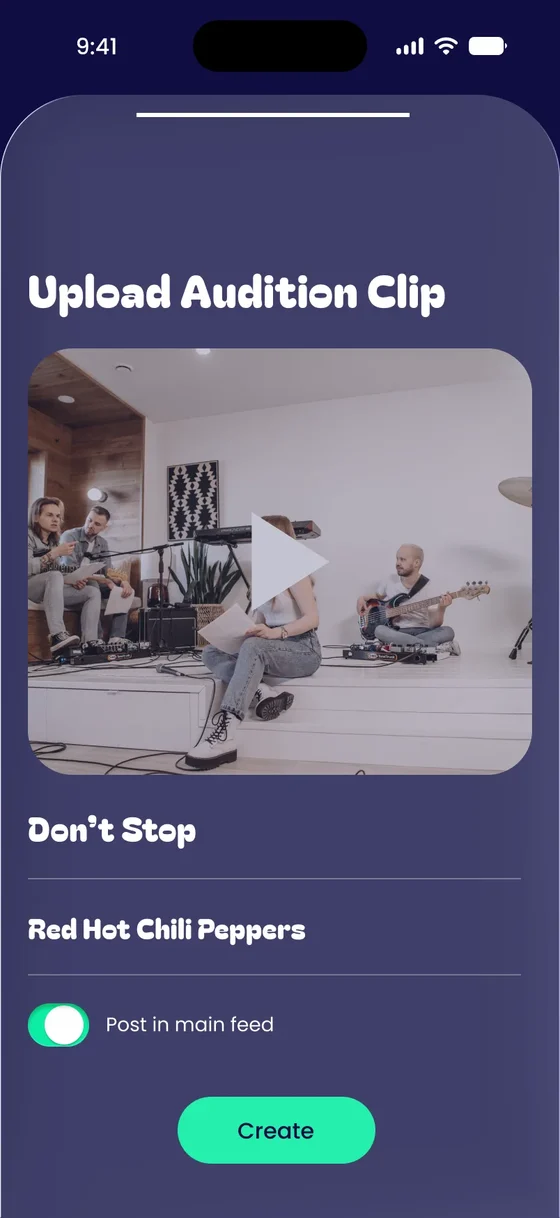
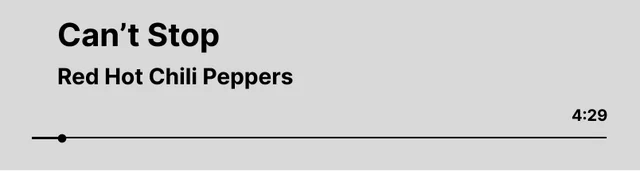
Requests and GigJams may not happen often, so the home feed also works as social media for musicians and fans, a reason to open the app in between. ID verification at sign-up keeps out bots and duplicate accounts, which would make GigJam histories less reliable.
Outcome
A usability test I ran with 3 participants in week 10 found four gaps, and all four were addressed in the final prototype.
- TrustTrust signals need visible detailUsers want more than a number or a button: they want to know who is behind it, and who can see it.
- GuidanceNew features need guidanceDuet auditions and invitation types are new ideas that need explaining on first use.
- FeedbackEvery action needs feedbackAfter each key action, users should be told the result.
- MatchingSkill matching is keyBoth sides care about matching levels; they need concrete experience, and beginners need a safe way in.
Bands get someone they’ve heard and can verify. Musicians get a way into the music scene, and a record that follows them.
A course project, not a launched product. The personas are from the team’s research; the UX law review and the week-10 usability test were mine.
Next projectJianxu